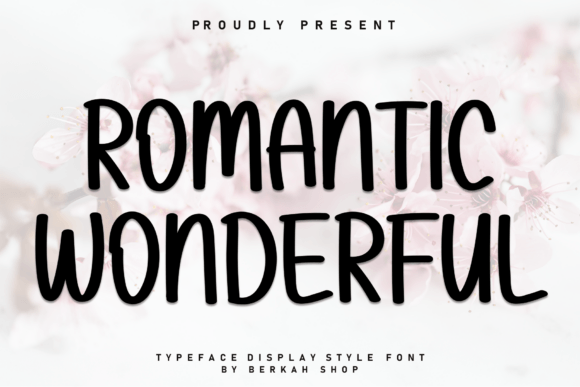
Romantic Wonderful: A Relaxed Handwritten Font for Branding
I was standing in my tiny studio, staring at a stack of candle jars I had just poured the night before. The wax had set beautifully, the scent was exactly what I wanted, but the labels I had designed months ago suddenly felt wrong. They looked stiff, almost like they belonged on a generic shelf rather than in the hands of someone who cared about handmade details. I realized then that what my products were missing wasn't better photography or fancier boxes. It was typography that actually felt like me.
That search led me to Romantic Wonderful, a display font that shifted the way I thought about brand visuals overnight.
What Romantic Wonderful Actually Feels Like
Romantic Wonderful is a handwritten font that carries the relaxed, slightly imperfect charm of something drawn with a marker. The strokes are confident but not rigid, playful but not childish. There is a warmth in the letterforms that feels personal, like a note scribbled on a kraft paper bag rather than something mass-printed. The overall mood leans sporty and casual, with an ease that makes it incredibly versatile for branding, packaging, and visual storytelling.
For my candle business, this was exactly what I needed. I wanted the labels to feel approachable, like a small gift from a friend rather than a formal transaction. Romantic Wonderful gave me that without making the design feel sloppy or unpolished.
Why I Stopped Overcomplicating My Brand Voice
Before finding this typeface, I had tried dozens of options. Some were too delicate, disappearing on a shelf. Others were too bold, shouting when I wanted to whisper. What I learned through trial and error is that typography does so much more than carry words. It carries mood, intention, and a first impression that customers absorb before they even read a single phrase.
Romantic Wonderful helped me land on a visual identity that felt consistent across everything I made. Whether I was printing thank-you cards, designing a new product label, or updating my online shop banner, the font tied it all together. My small brand suddenly looked intentional rather than pieced together.
Where a Marker-Style Font Shines Brightest
Romantic Wonderful is built for display moments. It works beautifully on packaging design, where product names and short phrases need personality. I started using it on candle jar lids, hang tags for linen sprays, and the front of gift boxes. Each time, the result felt handcrafted and genuine.
Some of the most natural places to use a creative font like this include:
- Logos for boutique brands, coffee shops, and handmade sellers
- Product labels on skincare bottles, candle vessels, or food packaging
- Greeting cards and thank-you cards that feel handwritten and sincere
- Wedding supplies such as invitation envelopes, place cards, and favor tags
- Social media graphics where headlines need to pop with personality
- Website banners and online shop headers that set a friendly tone
- Stickers and flyers for events, pop-ups, or seasonal promotions
- Business cards and menus for cafés and small eateries
A friend who runs a small bakery recently asked me about updating her pastry box design. I watched her try Romantic Wonderful on a mockup, and the moment it appeared, the whole package softened. What was once a plain white box suddenly felt like something you would find at a weekend market, wrapped with care and signed by the baker herself. That is the kind of shift a well-chosen display font can create.
Readability and Practical Limits
Because Romantic Wonderful has a marker-drawn texture, I learned quickly that it works best for headlines, short phrases, and decorative accents. Using it for long paragraphs on a website or an entire product description would strain readability, especially on small mobile screens. I reserve it for the moments where I want warmth and recognition, like a product name, a tagline, or a prominent quote on a label.
On printed packaging, I always test the size. On small labels, the strokes can fill in slightly depending on the paper texture and printing method. A quick test print on matte sticker paper saved me from ordering hundreds of labels that would have looked muddy. If you are designing for packaging design or social media thumbnails, scale the font generously and keep the message short. That way the handwriting effect stays clear and inviting.
Pairing Romantic Wonderful With Other Typefaces
One of the most practical things I did was pair Romantic Wonderful with a clean sans serif font for the supporting text. The contrast gave me structure without losing personality. The handwritten font carried the emotion, while the sans serif handled the details like ingredients, instructions, or website addresses.
I have also seen other small business owners combine it with an elegant serif font for a more refined look, especially for wedding-related products or upscale boutiques. The mix of formal serif letterforms with the casual marker script creates an interesting tension that feels modern and curated. For those who want to lean fully into a handcrafted aesthetic, layering it with a softer script font or even another handwritten style can work on tags and decorative inserts, as long as the hierarchy stays clear.
The key with font pairing is restraint. Romantic Wonderful already carries a strong personality, so giving it space with a quieter companion typeface lets both voices be heard without competing.
How Typography Changed the Way Customers Saw My Business
When I updated my labels and social media templates with this creative font, something unexpected happened. People started commenting not just on the product itself, but on how the brand felt. They used words like "cozy," "friendly," and "inviting." I had not changed my ingredients, my pricing, or my photography style. I had simply made the visual language more consistent, and the modern typography choice was at the center of that shift.
Typography affects brand perception in ways that are hard to measure but easy to feel. A cohesive typeface choice signals care. It tells a customer that the person behind the product paid attention to the details. For a small business, that sense of trust and visual consistency can be the difference between someone scrolling past and someone adding an item to their cart.
What to Check Before Using This Font Commercially
Before committing Romantic Wonderful to any commercial design project, I made sure to review a few essentials. Every premium font comes with different permissions, and understanding what is covered matters, especially if you plan to use it on merchandise, client work, or digital downloads.
Here are the things I checked first:
- Whether the font licensing covers physical products, packaging, and templates
- If the file included alternates and ligatures for more natural-looking character combinations
- Which file formats were available and whether they worked with my design software
- Whether the font supported the languages I needed for my customer base, confirming multilingual support
- If there were multiple weights or styles included that could extend its use across different headings and accents
Taking ten minutes to verify these details gave me peace of mind before I printed hundreds of labels or shared design assets with a collaborator.
A Small Change That Continues to Pay Off
Months later, I still open a fresh batch of jars and feel genuinely pleased when I see the label. The handwritten quality of Romantic Wonderful has not lost its charm, and it continues to work across every new product I launch. It shows up on the hang tags tied to linen sachets, on the simple kraft stickers I use for seasonal releases, and in the Instagram stories where I announce restocks.
For any small business owner, entrepreneur, or maker who is trying to build a brand identity that feels authentic rather than manufactured, this handwritten font offers a practical starting point. It does not demand advanced design skills. It does not need to be overworked. It simply brings a relaxed, approachable voice to whatever you are creating, and in a world where so many brands compete for attention, that kind of genuine warmth is worth holding onto.